About
9 years in design and currently leading the effort of building a new B2B marketplace for SMBs.
Contact
About
9 years in design and currently leading the effort of building a new B2B marketplace for SMBs.
Contact
Walmart eGift Card redesign


Intro
Redesign the eGift Card purchasing flow with intuitive navigation, clear messaging, and flexible options to make gifting faster and more accessible, driving higher conversions.
My role
Design Lead
Duration
8 Weeks
Team
Product x1, Business x2 Engineers x3 Content Design x1, Compliance policy team x1, & Treasury team x1.
Intro
Redesign the eGift Card purchasing flow with intuitive navigation, clear messaging, and flexible options to make gifting faster and more accessible, driving higher conversions.
My role
Design Lead
Duration
8 Weeks
Team
Product x1, Business x2 Engineers x3 Content Design x1, Compliance policy team x1, & Treasury team x1.
Intro
Redesign the eGift Card purchasing flow with intuitive navigation, clear messaging, and flexible options to make gifting faster and more accessible, driving higher conversions.
My role
Design Lead
Duration
8 Weeks
Team
Product x1, Business x2 Engineers x3 Content Design x1, Compliance policy team x1, & Treasury team x1.
Project background
Low conversion rate
Project background
Low conversion rate
Project background
Low conversion rate
Our research shows that when users shop for eGift Cards, they expect a clear place to enter the recipient’s email. The legacy design does not support this, creating confusion.
0%
0%
0%
0%
Conversion rate
in 2024
Conversion rate
in 2024
Conversion rate
in 2024
0M
0M
0M
0M
Dissatisfied
customer
Dissatisfied
customer
Dissatisfied
customer
The problem
Failed to meet user’s basic needs
The problem
Failed to meet user’s basic needs
The problem
Failed to meet user’s basic needs
0%
0%
0%
0%
0%
0%
Buy gift cards
for others
Buy gift cards
for others
Buy gift cards
for others


Research shows 53% of users buy gift cards for friends/family and want a field to enter the recipient's email for direct delivery.
This convenience is key for digital gift cards: instant delivery satisfies last-minute needs and reduces friction.
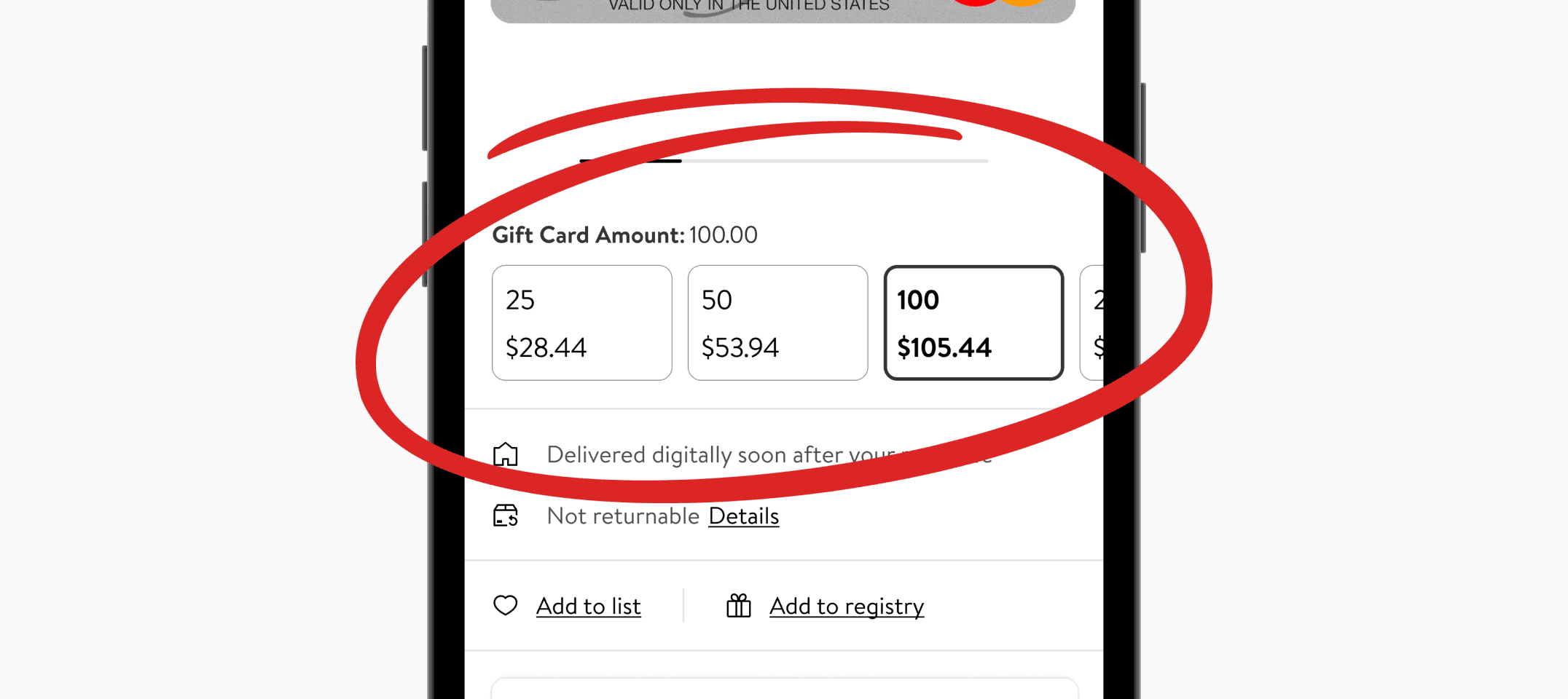
Research shows 53% of users buy gift cards for friends/family and want a field to enter the recipient's email for direct delivery.
This convenience is key for digital gift cards: instant delivery satisfies last-minute needs and reduces friction.


Objectives
User & business
Objectives
User & business
Objectives
User & business
Our research shows that users shopping for eGift Cards expect a clear, prominent place to enter the recipient's email for direct delivery. The legacy design lacks this support, leading to confusion and friction.
💁🏻♀️ User expectation (core)
Enable direct email delivery with easy recipient email entry.
🚧 Challenge
Balance fraud policies without compromising UX.
🧑🏼💼 Business objective
Increase conversion rate and close gaps with competitors.
🎯 Goal:
Launch MVP to boost engagement and retention rates.
Design process & approach
Key decisions and challenge in achieving product success
Design process & approach
Key decisions and challenge in achieving product success
Design process & approach
Key decisions and challenge in achieving product success
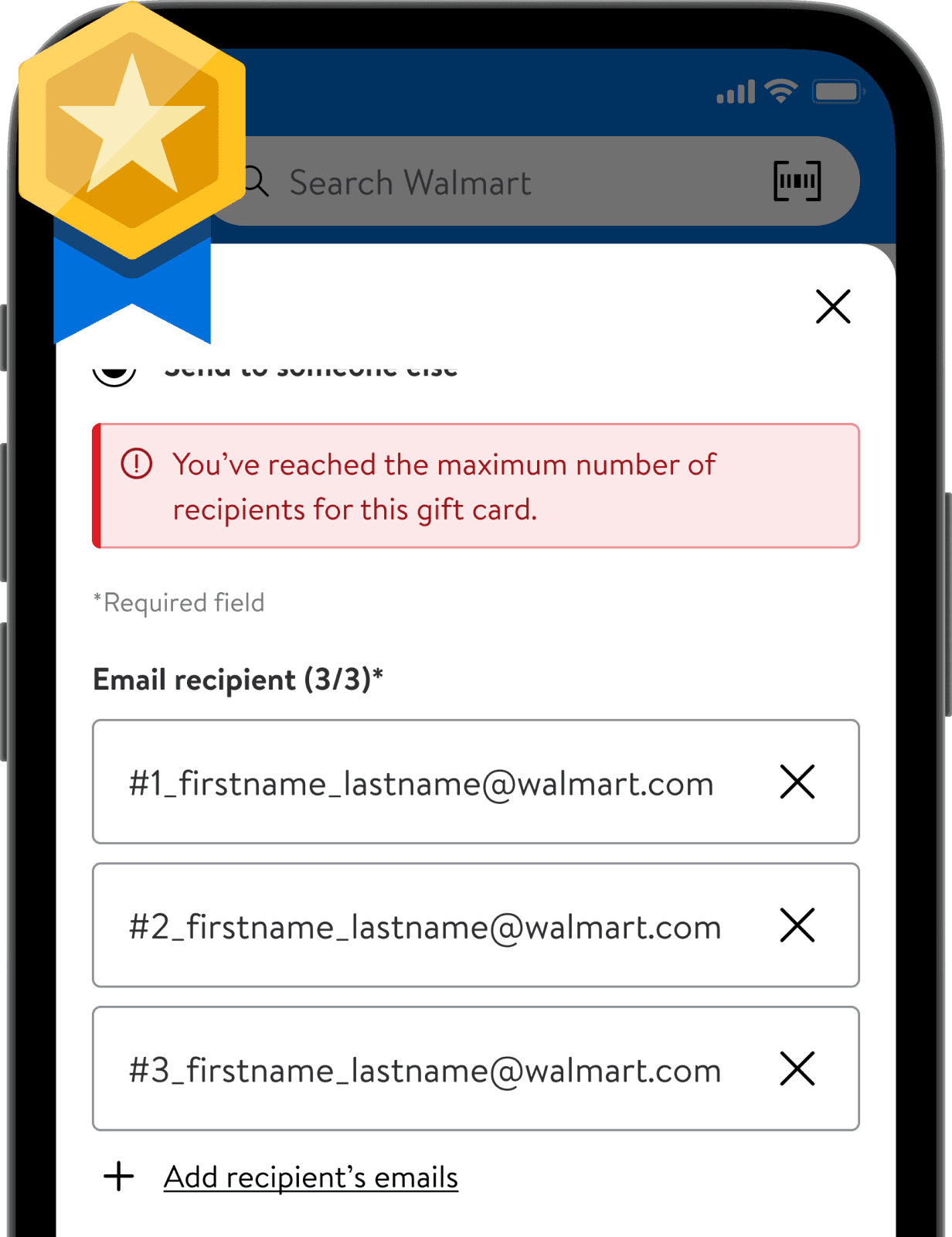
Dynamic email counter
Problem
Static "Up to 35 emails" messaging confused high-volume buyers (22% of users) when nearing purchase limits. The limit is dynamic ($500 total + card value), so the fixed message provided no real-time visibility into remaining capacity—causing errors, confusion, and drop-offs in bulk/gifting flows—while the majority (69%) still had a smooth happy path.
Solution
I designed a real-time dynamic email counter that instantly updates next to the recipient field and calculates allowable recipients based on current cart value and denomination.
Outcome
The new dynamic email counter provides clear visibility and clarity when entering recipient emails, reduces friction at the limit, and makes error messages easier to understand.
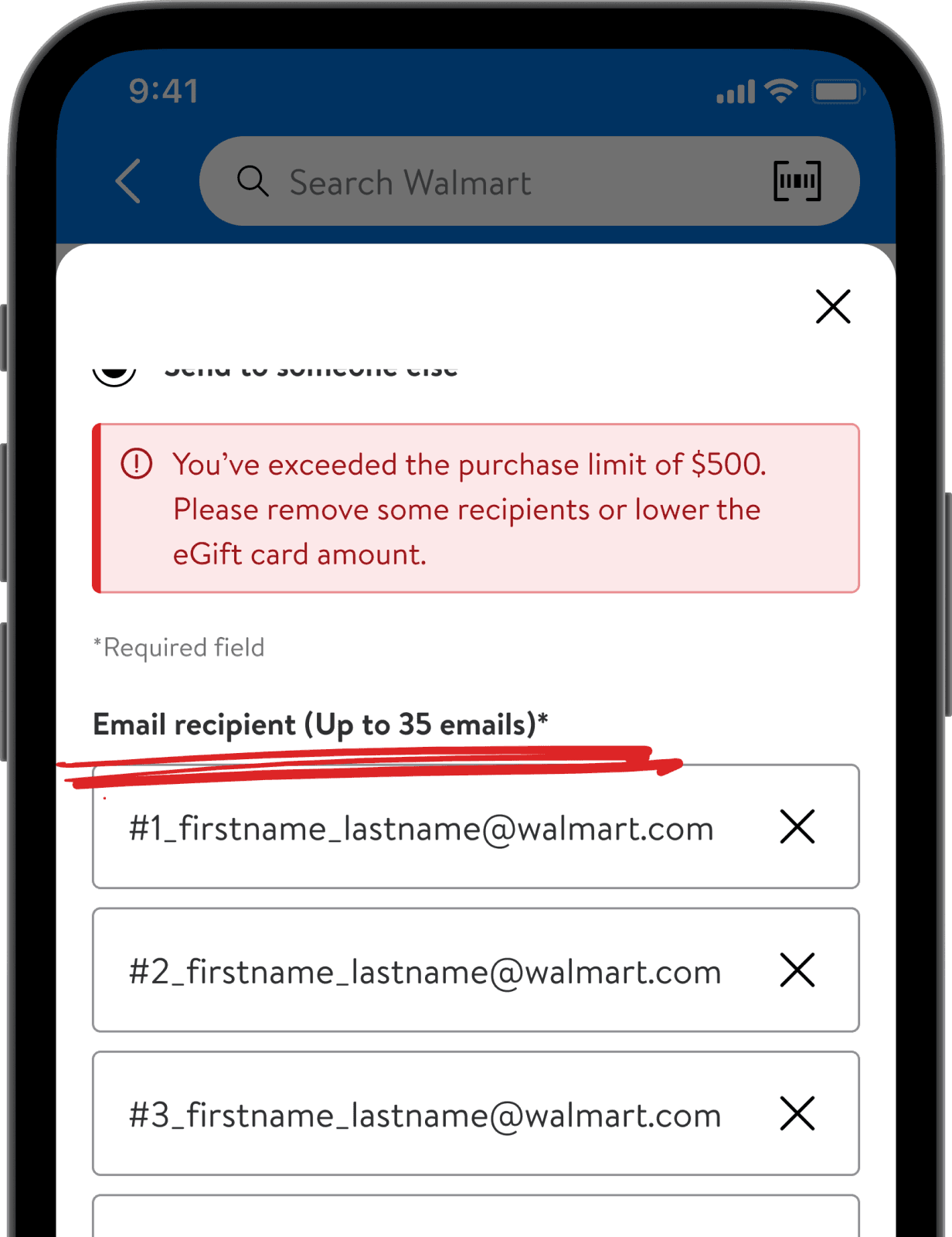


Solution #1
Static title message
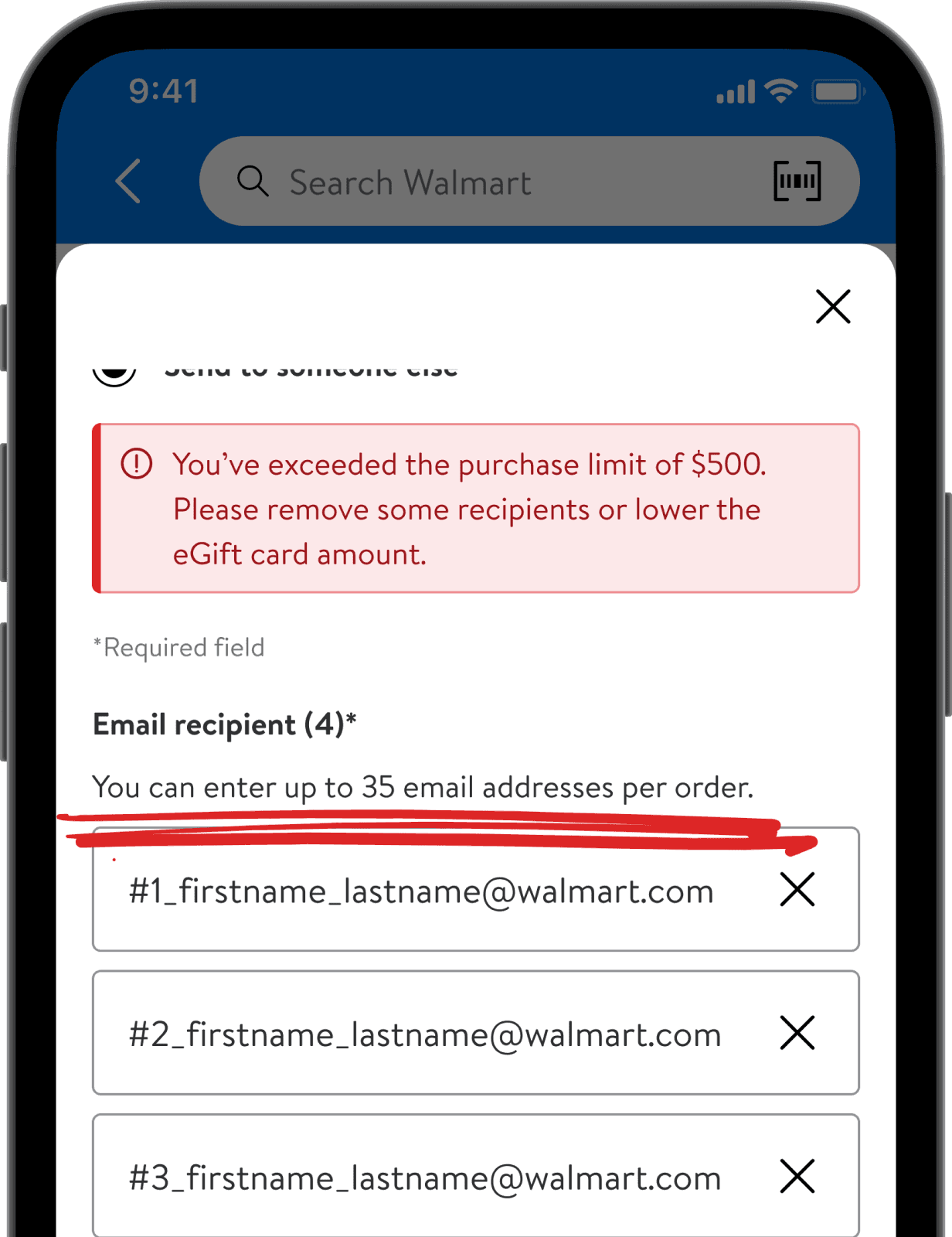
Solution #1
Static title message
Solution #1
Static title message


Solution #2
Email counter + static msg
Solution #2
Email counter + static msg
Solution #2
Email counter + static msg


Solution #3
Dynamic email counter
Solution #3
Dynamic email counter
Solution #3
Dynamic email counter
Invent a new design pattern to serve for all type of user
Problem
The standard "Add to Cart" pattern caused confusion and high friction during bulk purchases and gifting flows, especially when users needed to enter multiple recipient emails for direct delivery.
Challenge
Early testing showed low visibility of the new bulk/gifting features and high drop-off at the multi-recipient input step. The root cause was not poor design execution, but limitations in existing patterns and system constraints—making it difficult to serve both new and existing users seamlessly.
Solution
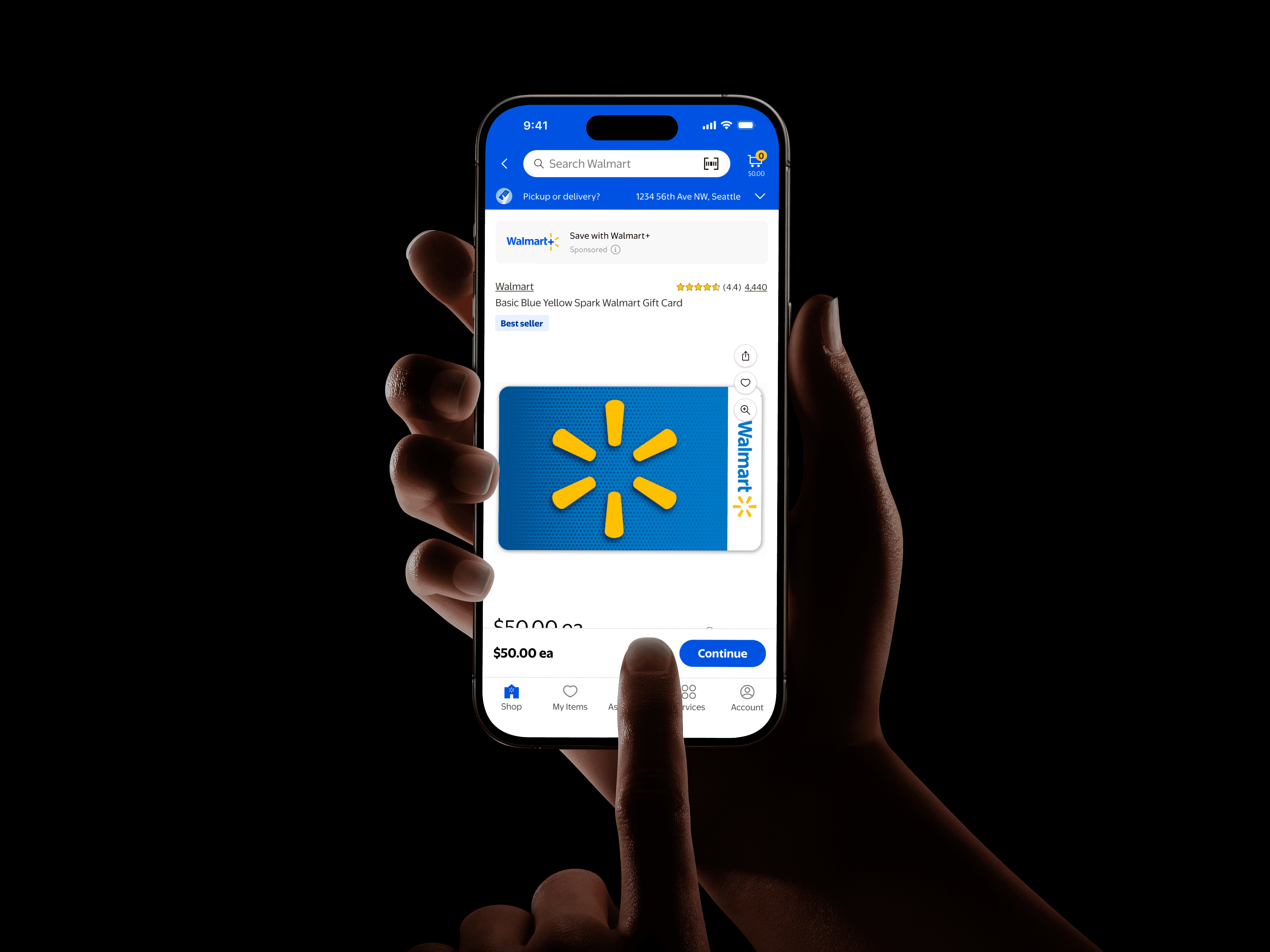
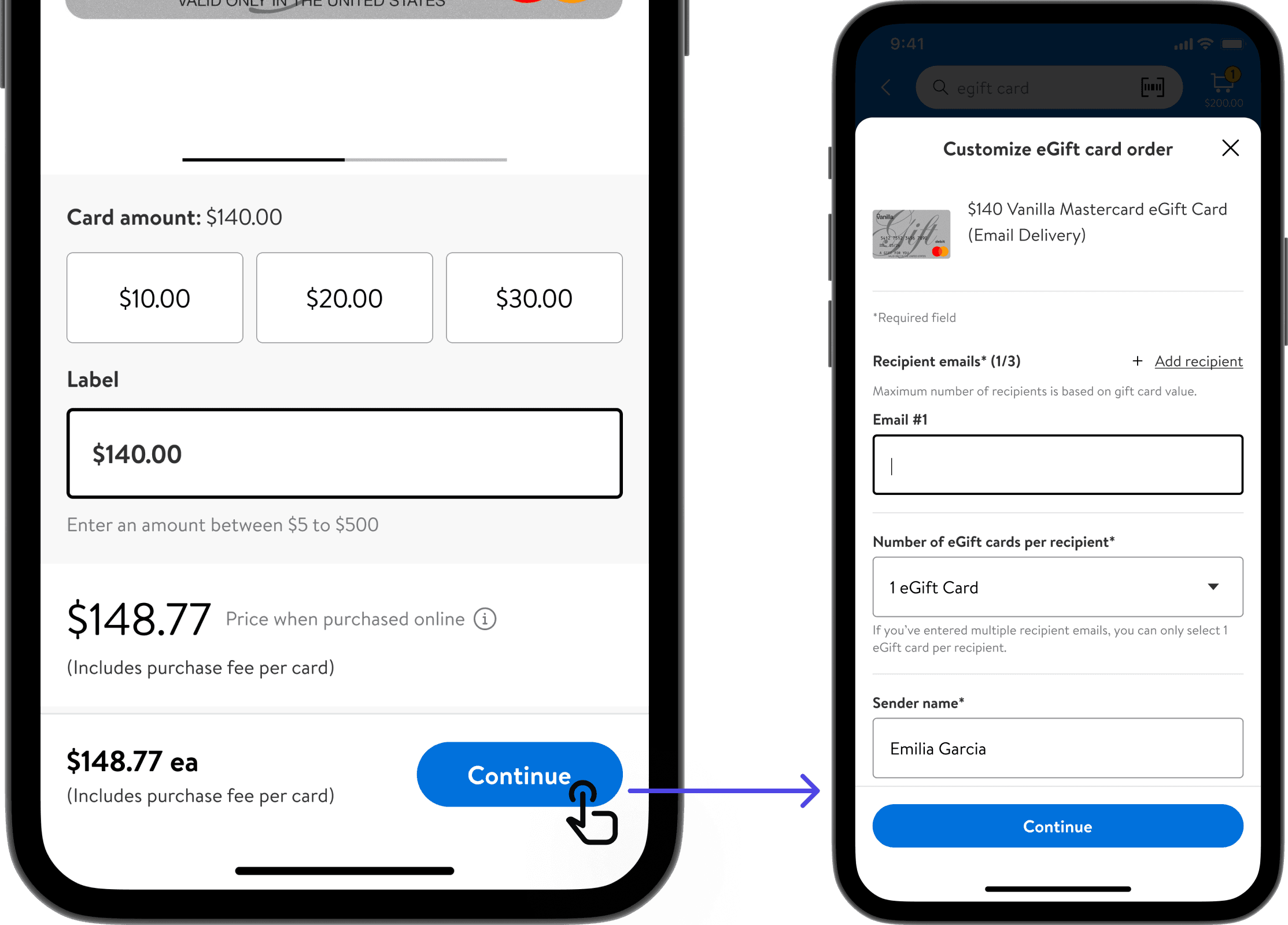
I invented a new design pattern: a prominent "Continue" CTA replaces "Add to Cart." Clicking it opens a guided bottom sheet as a step-by-step flow for entering multiple recipient emails. This reduces confusion, provides clear guidance, creates an intuitive experience for all user types, and improves completion rates.
Outcome
In the latest testing, all participants showed some initial learning curve due to the changed button behavior, but quickly understood and adopted the new experience without needing to explore the features extensively, demonstrating improved intuitiveness.
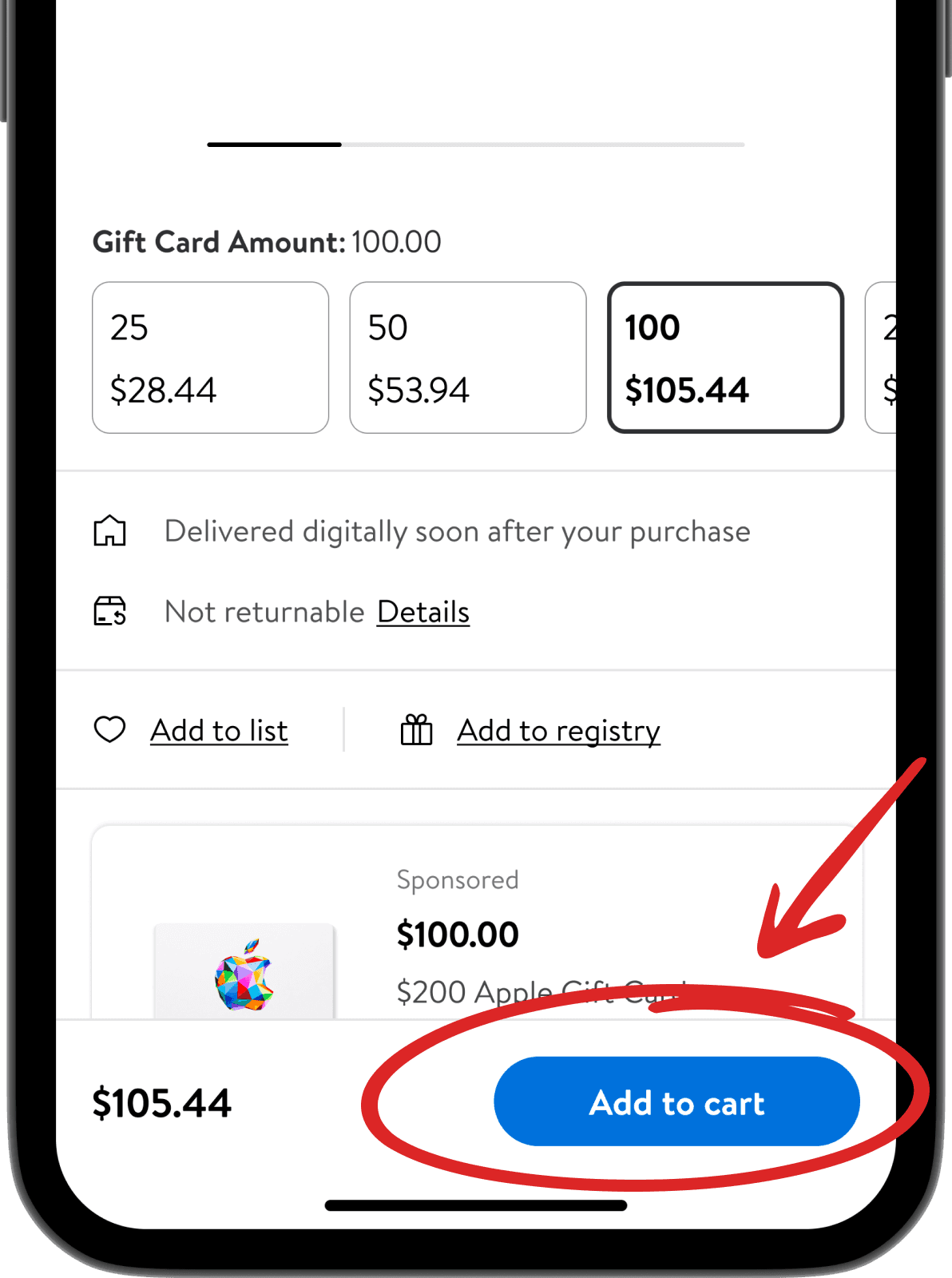


Before
"Add to cart"
Before
"Add to cart"
Before
"Add to cart"


After (v2.0)
“Continue” → “Recipient emails”
After (v2.0)
“Continue” → “Recipient emails”
After (v2.0)
“Continue” → “Recipient emails”
Existing design pattern cause UX conflict and failed to meet eGift Card's use case.
Problem
The existing design pattern converts the primary button to a stepper after "Add to cart" is clicked, creating a UX conflict because gift card quantity is controlled by the number of recipient emails entered, not the stepper.
Challenge
Disabling the stepper behavior required customizing the primary button, which increased implementation effort and extended the project timeline.
Solution
Use a secondary pattern called "PAC page" that overlays the primary button, preventing user interaction with the stepper while avoiding any need for the engineering team to customize the button behavior.
Outcome:
The new solution reduced the engineering team's workload and level of effort while creating a business opportunity to upsell additional products.
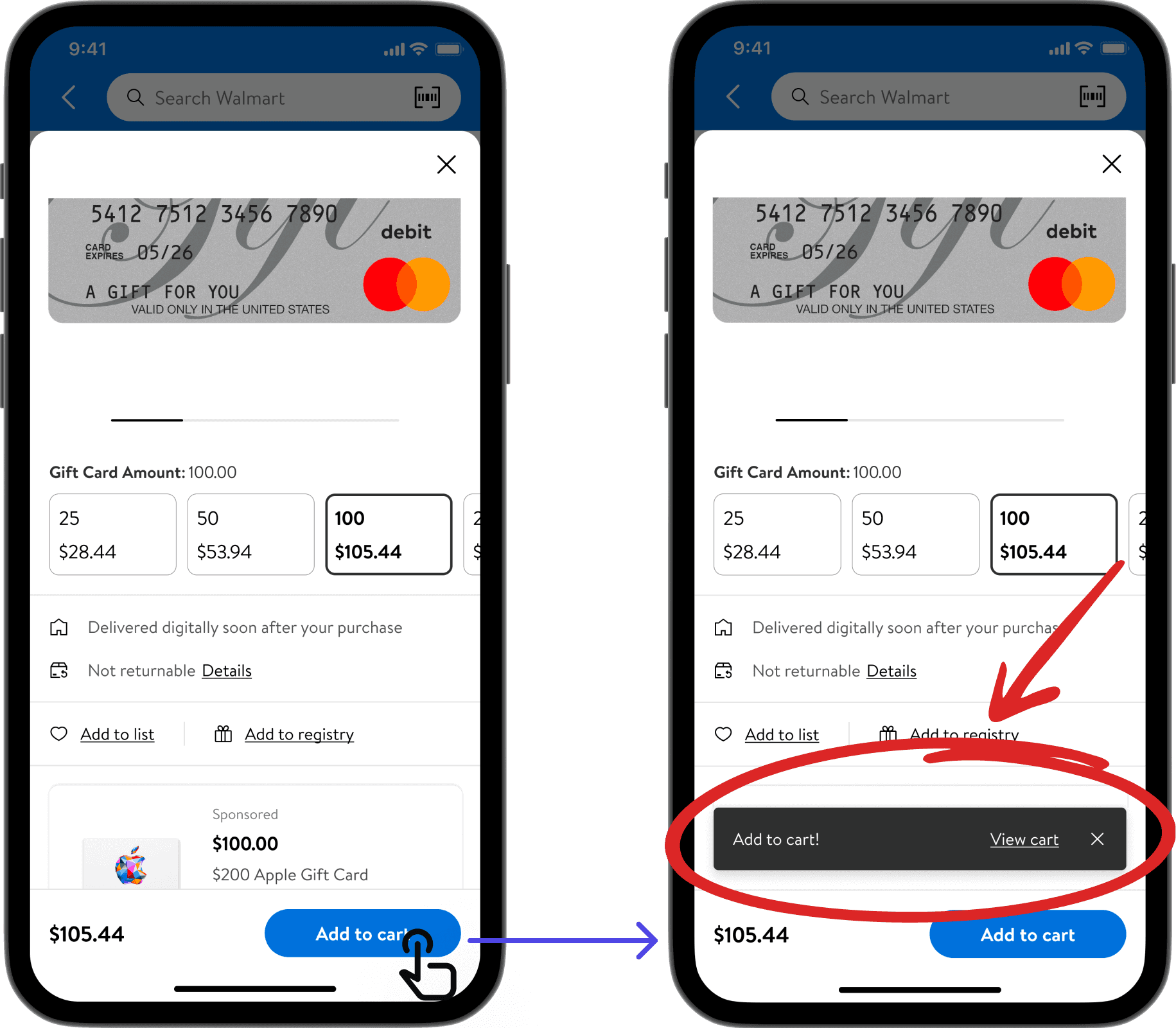


Before
"Snackbar"
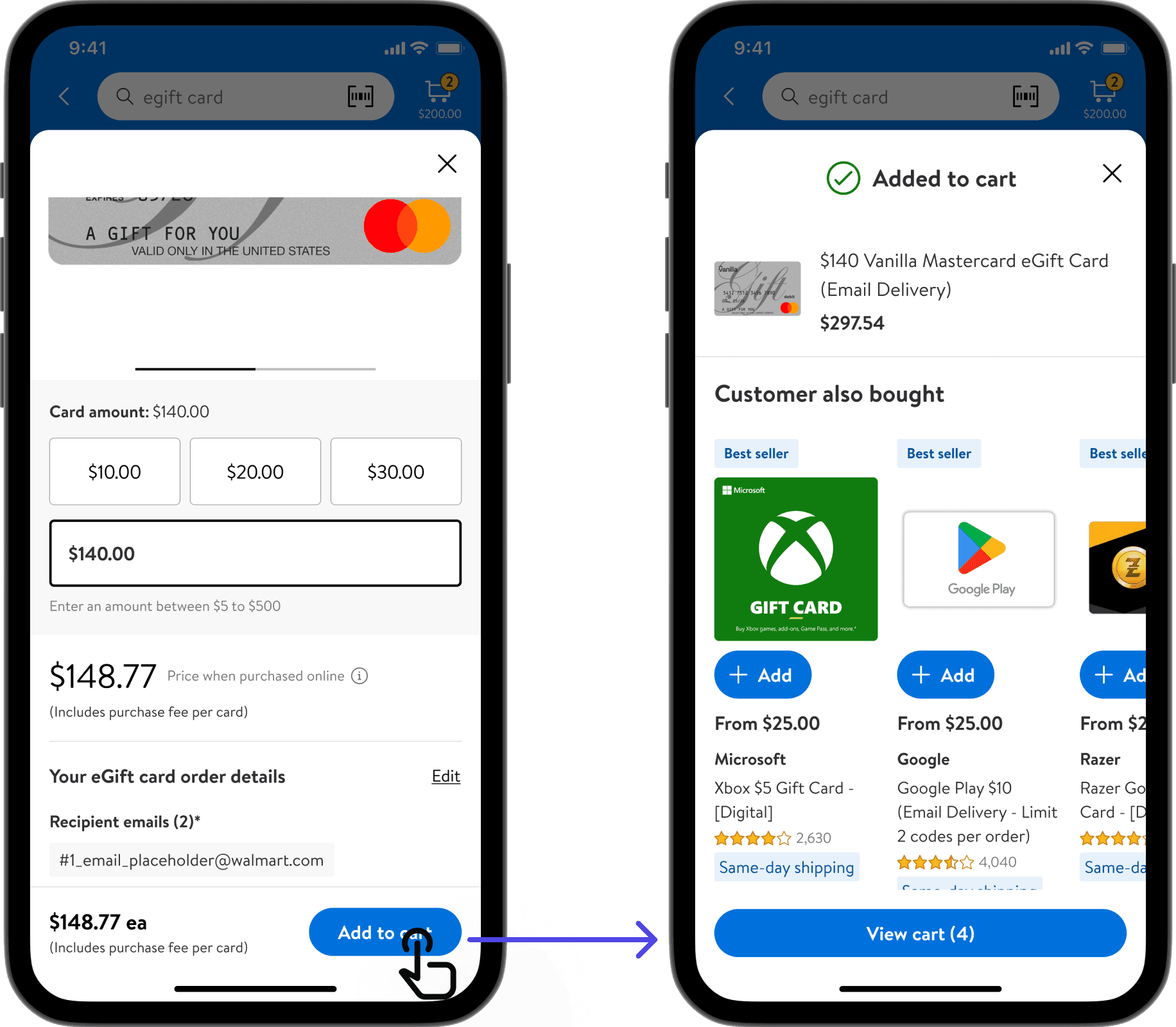
Before
"Snackbar"
Before
"Snackbar"


After (v2.0)
"PAC Page"
After (v2.0)
"PAC Page"
After (v2.0)
"PAC Page"

Optimal Solution
Final design & outcomes
Optimal Solution
Final design & outcomes
Optimal Solution
Final design & outcomes